Table of contents
Efficient land management often involves handling vast amounts of organic debris, raising the question of which equipment is best suited for the task. The choice between mulchers and chippers can significantly impact productivity, maintenance, and the overall health of the landscape. Explore the following paragraphs to gain insights into these machines and discover which tool will optimize your land management efforts.
Understanding mulchers
Mulchers play a decisive role in modern land clearing and vegetation management by employing a sophisticated mulcher mechanism centered around a powerful rotor assembly. This rotor assembly, fitted with specialized blades or hammers, rapidly spins to shred organic debris—such as branches, brush, and small trees—into fine mulch. This process not only accelerates the breakdown of materials but also deposits the resulting mulch directly onto the ground, creating an even layer of ground cover that aids in soil moisture retention and erosion prevention.
The versatility of mulchers stems from their ability to tackle a wide variety of organic debris, ranging from thick underbrush and saplings to lighter vegetation and leftover crop residue. Operators often select mulchers for sites where fast, efficient land clearing is needed, especially in areas with dense, mixed vegetation where conventional removal methods are less practical. By converting unwanted plant material into ground cover, mulchers help maintain ecological balance and prepare land for replanting or other uses, making them a preferred option for forestry, utility corridor maintenance, and large-scale landscaping projects.
For those considering equipment for vegetation management or land clearing, comparing the technical specifications and applications of various mulcher models is highly recommended. Detailed information about mulcher mechanism innovations and rotor assembly advancements is available on this page, which helps users determine the right solution for their specific needs.
Exploring wood chippers
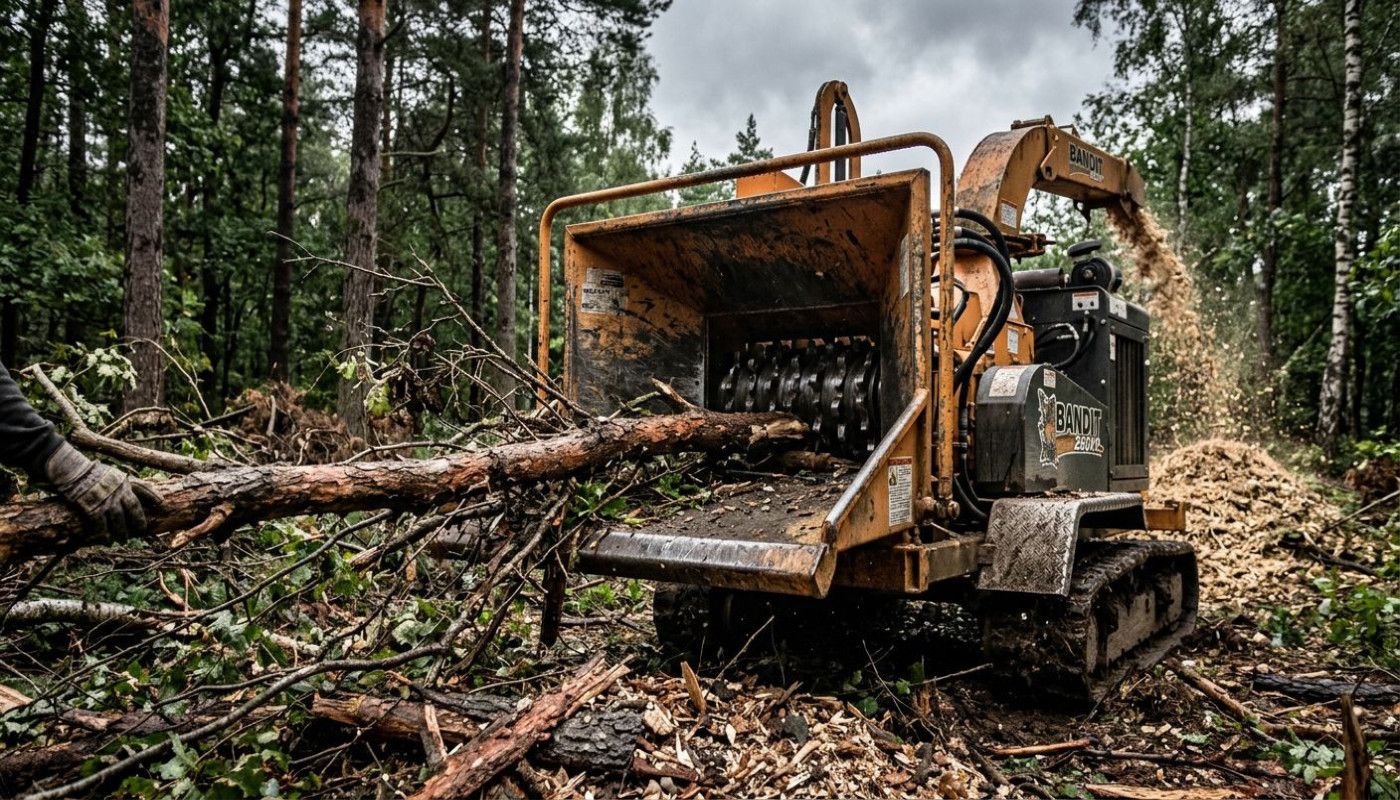
Wood chippers play a vital role in sustainable landscaping and efficient brush disposal, standing out from mulchers due to their specialized design and operation. These machines utilize a robust feed mechanism that draws branches, limbs, and other woody debris through a feed chute, directing the material toward sharp, rotating blades or hammers. Unlike mulchers, which process softer yard waste and leaves into fine mulch, wood chippers are engineered to handle larger, denser wood pieces, producing output material in the form of uniform wood chips. The quality and consistency of these chips depend on the size and type of feed chute, as well as the chipper's internal configuration.
Chipping becomes particularly effective for land management tasks that involve substantial amounts of woody debris, such as post-storm cleanup, orchard maintenance, or site clearing. The output material from wood chippers can be repurposed for sustainable landscaping, serving as ground cover, erosion control, or even as a biomass resource. The distinct feed mechanism and sturdy construction allow wood chippers to process thick branches, typically up to several inches in diameter, ensuring efficient brush disposal without clogging or repeated handling. This approach not only minimizes waste but also supports responsible land stewardship by returning organic matter to the environment in a controlled, beneficial form.
Comparing efficiency factors
When evaluating equipment efficiency for land management, several technical factors must be considered to determine whether a mulcher or a chipper offers superior performance. Throughput rate is a central metric, with mulchers generally excelling in processing large volumes of brush and smaller vegetation at a rapid pace, making them suitable for clearing overgrown fields or undergrowth quickly. Chippers, on the other hand, are designed for higher processing speed when handling thicker branches or tree trunks, resulting in coarser output that can serve as woodchips for various uses. Maintenance needs also differ; mulchers, with their exposed cutting surfaces, often require more frequent inspection and blade sharpening, while chippers demand regular attention to feeding mechanisms and safety features due to their more aggressive cutting action.
Terrain adaptability plays a significant role in equipment selection. Mulchers are typically mounted on tracked or wheeled vehicles, enabling efficient operation across uneven or sloped landscapes, which enhances their suitability for diverse environments where access can be a challenge. Chippers, though sometimes mobile, are best used in accessible, stable locations where material can be brought to the machine. Material throughput is influenced not just by the mechanical design but also by the type and condition of the vegetation, so land managers should assess whether their primary task involves dense brush, mixed material, or larger timber. By carefully weighing these considerations—processing speed, throughput rate, maintenance needs, and terrain adaptability—one can match the right tool to the demands of the specific land management project.
Environmental and safety considerations
Assessing the environmental impact of mulchers and chippers requires attention to both emissions and noise levels. Gasoline-powered models often generate higher noise emissions and release more pollutants compared to electric alternatives, making it advisable to select machinery with advanced emission controls or electric power when possible. Noise emissions can disturb wildlife and local communities, so using equipment with sound-dampening technologies and scheduling operations during less sensitive times helps reduce negative effects. Machine safety is another factor, as both mulchers and chippers present significant risks. Equipping devices with a safety interlock system prevents accidental operation, safeguarding operators from mechanical hazards. Operator training is vital to ensure users understand machine functions, safe feeding techniques, and emergency shutdown procedures. Implementing best practices such as wearing personal protective equipment, maintaining clear communication among crew members, and conducting regular equipment inspections further minimizes risk. Prioritizing these approaches allows land managers to lower their environmental footprint while enhancing safety standards on site.
Making the right choice
When optimizing equipment selection for land management goals, creating a decision matrix proves highly beneficial. Start by assessing the debris type present on the property—mulchers excel at processing brush, smaller branches, and organic ground cover, while chippers are best suited for converting larger limbs and woody material into manageable chips. Consider the desired end product: if the intention is to clear land and return nutrients to the soil, mulchers deliver finely shredded mulch that promotes landscape health and soil regeneration. Conversely, if producing transportable wood chips for biofuel or landscaping purposes aligns better with project objectives, a chipper is more effective. Evaluating these elements within a structured decision matrix ensures each piece of equipment aligns with both immediate needs and the ongoing vitality of the landscape, ultimately supporting sustainable land management practices.
Similar articles

Exploring The Effectiveness Of Ultrasonic Repellers In Gardens

The rainwater chain, a symphonic and delicate accessory for your garden !

Home automation for seniors enhancing comfort and safety

Unraveling the Mystery of Biosphere Residences
